Download Geometry Dash APK 2.2.144 Free for Android
RobTop Games APK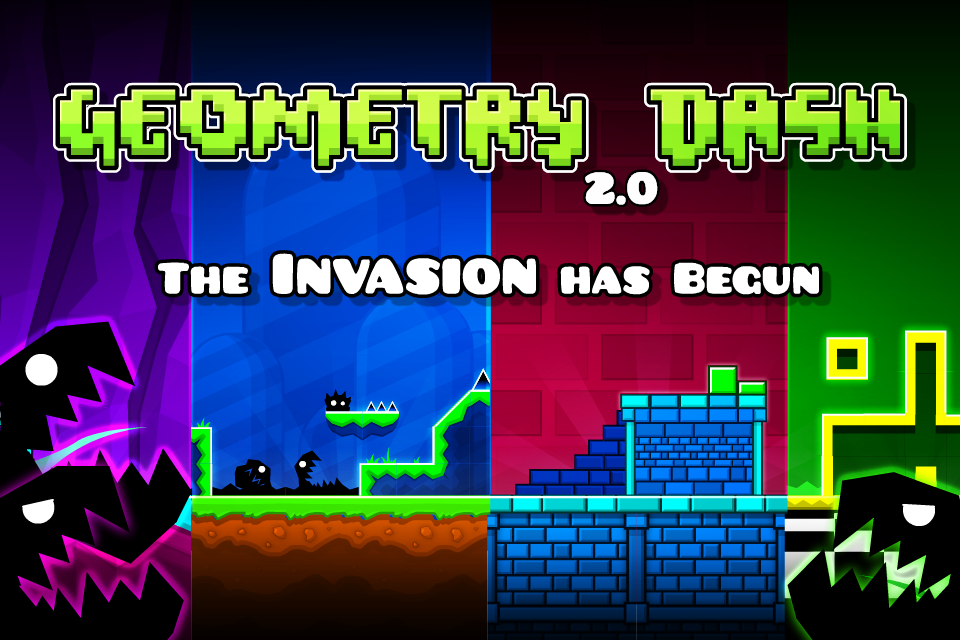
| Tên | Geometry Dash |
|---|---|
| Nhà phát hành | RobTop Games |
| Phiên bản | 2.2.144 |
| Kích thước | 75MB |
| Yêu cầu | Android 5.0+ |
| Google Play | Google Play ↗ |
| Danh mục | Arcade |
| Lượt tải | 9 |
| Giá | MIỄN PHÍ 3.99 USD |
| Đánh giá |
★
★
★
★
★
0/5
(0)
|
| Tác giả | |
| Cập nhật |
Geometry Dash drops you between eight forms (cube, ship, ball, UFO, wave, robot, spider and swing), sometimes inside a single five-second stretch, all synced to the beat.
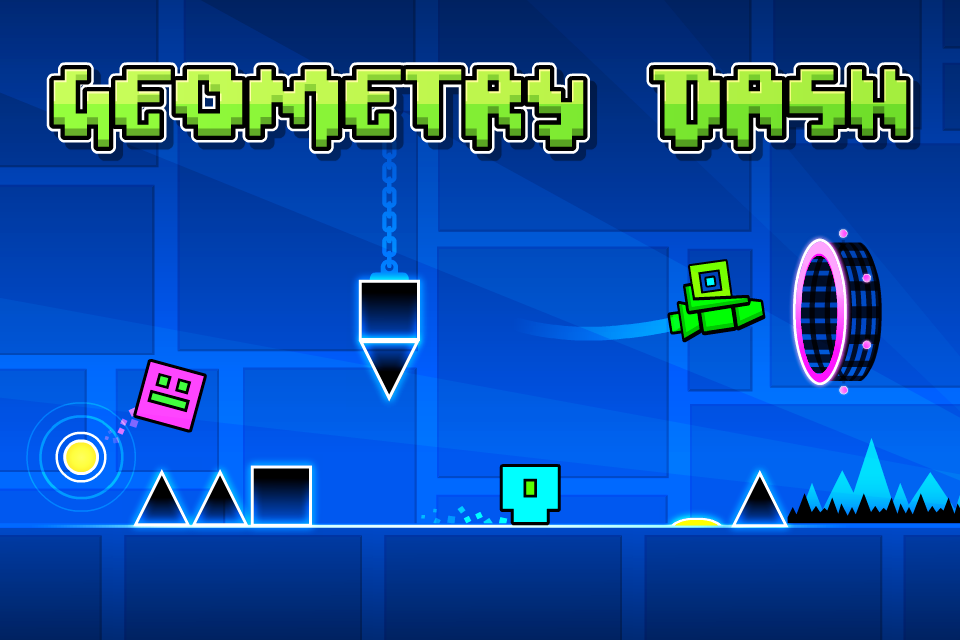
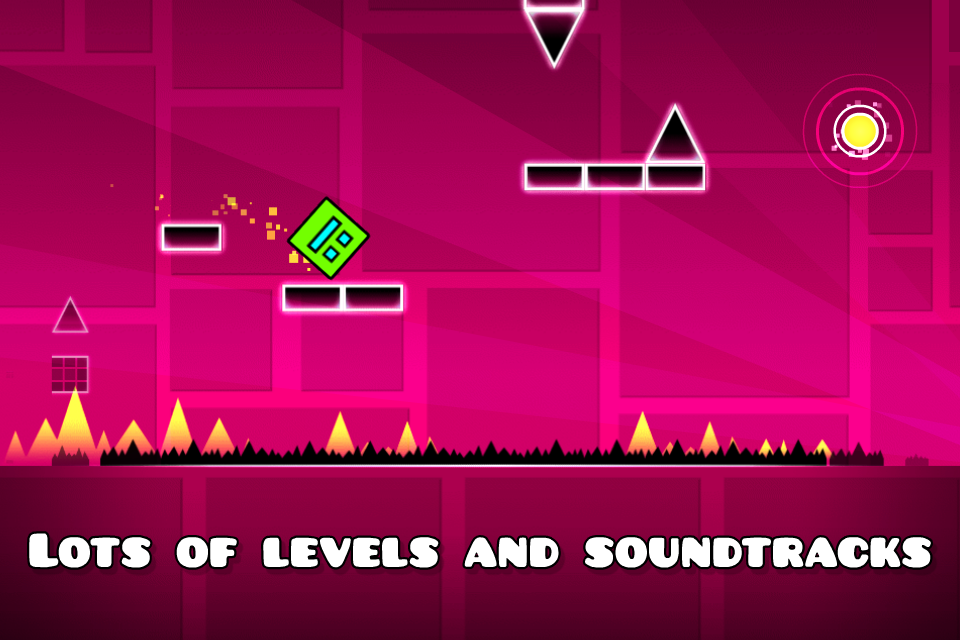
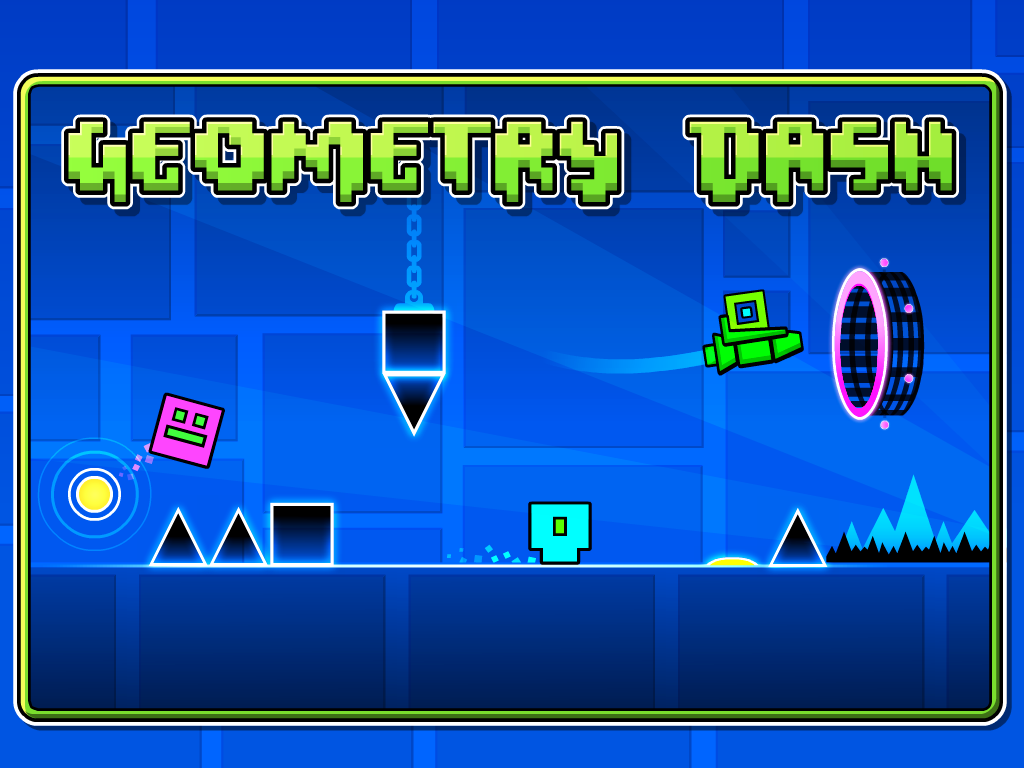
Geometry Dash is a rhythm-based action platformer from RobTop Games AB, built by Robert Topala (known in the community as RubRub), with version 2.2.144 on Android. The core loop is one input: tap to jump, hold to fly, time everything to the music. What sits under that loop is far deeper, with 20+ official levels rated on a 1-to-10 star scale, eight movement forms that rewrite the controls mid-run, and a full level editor that has produced millions of community stages. The mobile build also carries Practice Mode checkpoints and the open-ended Platformer Mode added in update 2.2. This page covers what the stock APK does well and how the MOD build changes the grind.
- Eight forms flip the controls every few seconds
- Official levels climb a 1-to-10 star difficulty ladder
- The level editor powers millions of community-made stages
- Icon Kit, four currencies and the hidden Vault codes
- Practice Mode adds checkpoints, Platformer Mode removes the finish line
- What’s new in version 2.2.144
- Geometry Dash MOD APK features
- Frequently asked questions
Eight forms flip the controls every few seconds
The single hardest part of Geometry Dash is not the spikes, it is that the control scheme changes the instant you hit a form portal. The game runs eight forms, and most levels cycle through four or five of them, sometimes inside one short section.
Each form reads your taps differently, so muscle memory built on one mode actively works against you on the next:
- Cube: tap to jump on a fixed arc. The baseline form, and the one every level opens with.
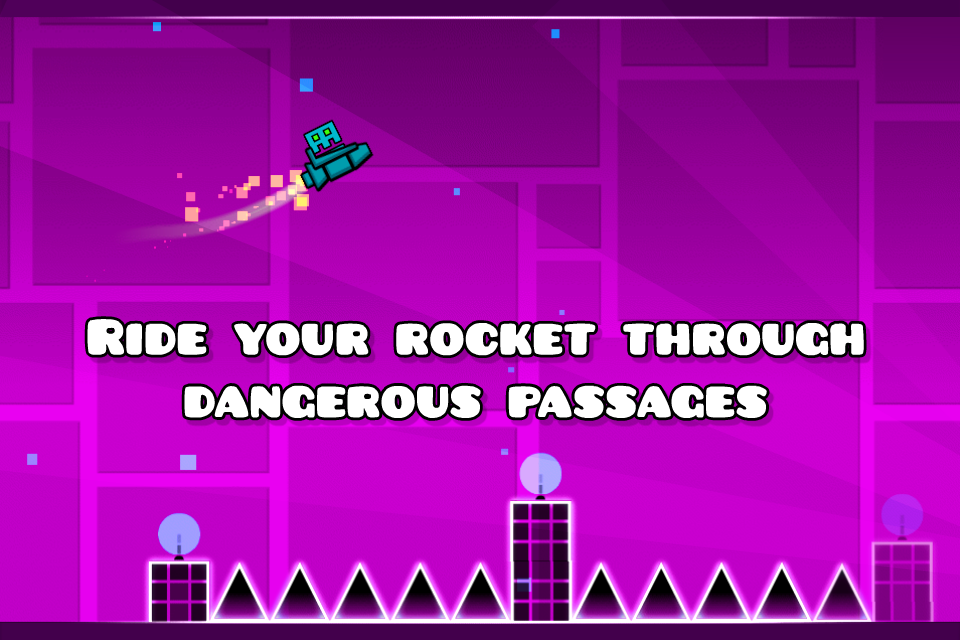
- Ship: hold to climb, release to fall. A floaty flight mode where over-tapping slams you into the ceiling.
- Ball: tap to flip gravity between floor and ceiling, rolling along whichever surface you land on.
- UFO: each tap gives a small upward hop, closer to a flappy rhythm than the ship’s hold.
- Wave: hold to move up at a 45-degree angle, release to move down at 45. Gravity does nothing here, so it is pure diagonal steering.
- Robot: tap-and-hold for variable jump height, the only ground form where hold time changes the arc.
- Spider: tap to teleport instantly to the opposite surface, with no travel time between floor and ceiling.
- Swing: added in 2.2, it flips gravity on every tap and glides between surfaces, the newest form in the roster.
Speed portals stack on top of all eight, scaling the auto-scroll to 0.5x, 1x, 2x, 3x or 4x. A wave section at 4x speed gives you a fraction of a second to react, which is why the wave is the form most players name as their wall. Mini portals shrink your icon and tighten its physics, and dual portals split you into two icons you steer at once. Learn the eight forms first, because every official and community level is just these mechanics recombined.
Official levels climb a 1-to-10 star difficulty ladder
Geometry Dash rates every official stage from 1 to 10 stars across six named tiers, and the jump from the top of one tier to the next is steeper than the star count suggests. The tiers run Easy, Normal, Hard, Harder, Insane and Demon, with Demon itself split by the community into Easy, Medium, Hard, Insane and Extreme Demon.
The 20+ main levels are paced as a teaching ladder. Stereo Madness opens with the cube and the first ship portal. Cycles introduces the ball, Theory of Everything brings in the UFO, Blast Processing hands you the wave, Geometrical Dominator centres on the robot, Fingerdash adds the spider, and Dash showcases the swing form. Each level drops one new mechanic so you meet the eight forms in order rather than all at once.
Three main-game stages carry the Demon rating and act as the skill checks: Clubstep, Theory of Everything 2 and Deadlocked. These pack tight ship corridors, 3x-speed transitions and frame-perfect timing windows where a single mistimed tap restarts the run. Every level also hides three Secret Coins, often down a hidden drop or behind a riskier route, and chasing those coins is what unlocks several high-prestige icons later.
One detail most level lists skip: the star value is not just bragging rights. Stars are a currency. Beating levels feeds your star total, and totals like 5,000 or 6,500 stars unlock specific colours and icons in the kit, so difficulty progression and customisation are wired into the same number.
The level editor powers millions of community-made stages
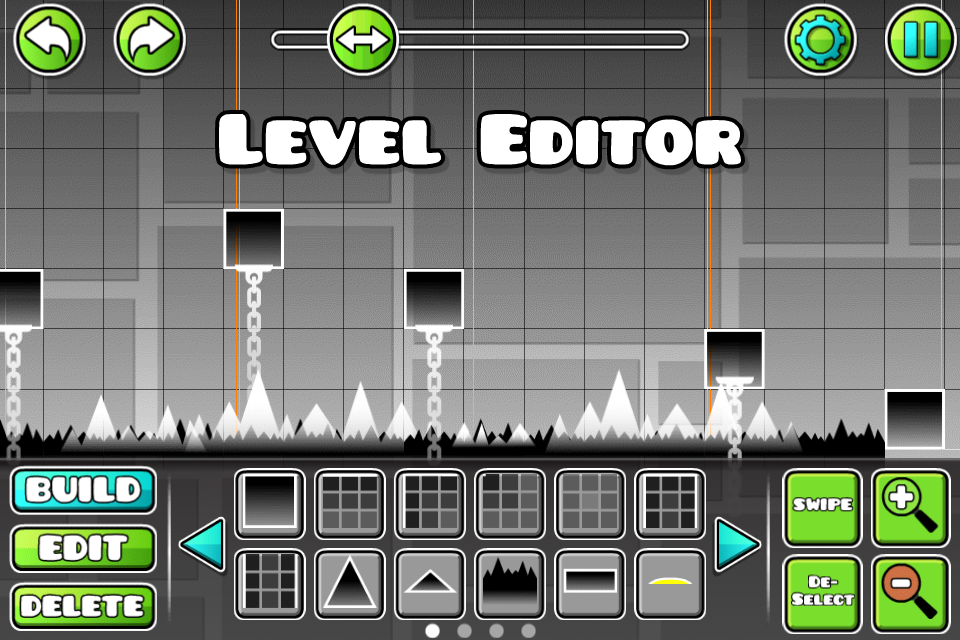
The 20-plus official levels are the small part of Geometry Dash. The real volume sits in the level editor, which is the same toolset RobTop uses, handed to players in full. Community creators have published millions of stages, and the rating system sorts them so the standout builds surface to everyone.
Inside the editor you place blocks, hazards and every form portal, then layer triggers on top to control the camera, colour pulses, movement and post-processing effects. The 2.2 update widened this toolset sharply, and 2.2.144 added a trace system that helps creators line objects up precisely, which is why recent featured levels look closer to animated music videos than to simple obstacle courses.
Finished levels run through a difficulty pipeline. Players rate them, moderators send strong ones to RobTop, and a level can be marked Featured, Epic, Legendary or Mythic, then bundled into Gauntlets, themed packs of five levels grouped by a tag like Fire, Ice, Poison or Demon. Clearing a Gauntlet hands out a rewards chest, which ties the community content back into the icon and currency economy.
This is the search intent most people miss when they look up the game: they assume “20-ish levels” and a short playtime. In practice the campaign is a tutorial for an endless, player-built library, and that library is the reason a 2013 game still gets new content every week.
Icon Kit, four currencies and the hidden Vault codes
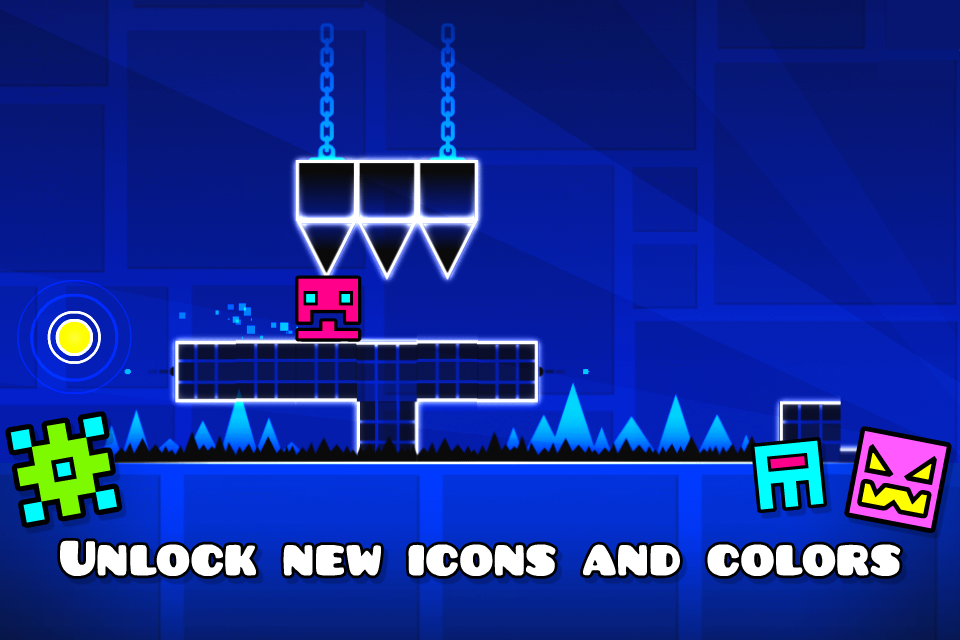
Customisation in Geometry Dash is gated behind four separate currencies, and knowing which one unlocks what saves hours of aimless grinding. You earn Stars from beating levels, Diamonds from daily and weekly challenges, Mana Orbs from finishing online stages, and Secret Coins plus User Coins from the official and community campaigns.
The Icon Kit covers a skin for all eight forms (cube, ship, ball, UFO, wave, robot, spider, swing) plus primary and secondary colour slots. Some skins unlock by hitting a star milestone, others by completing a specific Gauntlet, and a large set is bought from the Shops:
- The Shop: run by the Shopkeeper, sells icons priced around 1,000 Mana Orbs each.
- Community Shop: unlocks once you hold 200 Diamonds, then sells more icons for Mana Orbs.
- Secret Shop: Scratch’s shop, locked behind 5 Demon Keys and 500 Diamonds, with the rarest skins and effects.
On top of the shops sit the Vaults, hidden code-entry rooms that most casual players never find. The Vault opens after you collect 10 User Coins and lives in the settings menu. The Vault of Secrets and the Chamber of Time take secret text codes that grant icons, colours and diamonds outright. Typing “river” in the Chamber of Time, for example, unlocks a specific colour without spending a single orb. The catch is that the highest-value icons still demand thousands of stars or a stocked Secret Shop, so a fully unlocked kit through normal play takes a serious time investment.
Practice Mode adds checkpoints, Platformer Mode removes the finish line
Practice Mode is the single feature that makes Geometry Dash beatable rather than rage-quit fuel. In a normal run, one death sends you to 0%. In Practice Mode, you drop green checkpoint diamonds anywhere on the track, and a death sends you back to the last checkpoint instead of the start.
That changes how you learn a hard stage. On a Demon level like Deadlocked, you place a checkpoint before each tight ship corridor, drill that one section until the timing is automatic, then move the checkpoint forward. Progress in Practice does not count toward your completion percentage, but it builds the muscle memory the normal run needs. Skipping Practice is the most common reason mid-tier players stall on Insane and Demon content.
Platformer Mode, added in update 2.2, breaks the one rule that defined Geometry Dash for a decade: the auto-scroll. In a Platformer level the screen does not push you forward. You move left and right yourself, jump on demand, and explore stages that can branch instead of running on a single fixed line. The campaign’s Platformer stages, including the levels inside “The Tower,” play more like a precision action-platformer than a rhythm runner. RobTop has confirmed the wave and swing forms are still being adapted into this mode, so it is the part of the game most likely to grow next.
What’s new in version 2.2.144
Version 2.2.144 reached Android and iOS in late January 2026 and builds on the 2.2 foundation that launched in December 2023 with the swing form and Platformer Mode. It is a quality-of-life and systems update rather than a content drop, but one change matters more than the rest.
The headline addition is Click Between / On Steps, the official version of the input system competitive players ran unofficially for years as CBF (Click Between Frames). Older builds tied your taps to the frame refresh rate, so timing behaved slightly differently on a 60Hz screen versus a 144Hz or 240Hz one. 2.2.144 separates input timing from frame rendering, so a frame-perfect jump registers the same regardless of your display, which makes hard Demon runs fairer across devices.
The rest of the changelog covers competition and creation. New leaderboards for Moons, Demons and User Coins add three ranking boards beyond the existing Stars leaderboard, giving Platformer players and coin hunters their own charts. The update adds new Gauntlets, a new trace system in the level editor for aligning objects, and improved networking that steadies level downloads and uploads. The batch around 2.2.144 also folded in a new official level and trimmed the pause menu, with RobTop confirming the next major content update is in active development.
Geometry Dash MOD APK features
The Geometry Dash MOD build removes the two biggest walls in the stock game: the currency grind behind the Icon Kit and the brutal one-mistake-restart loop on Demon levels. It opens the full customisation set and adds practice tools the base game never included, aimed at players who want to study hard stages or run a complete icon kit without thousands of stars and orbs.
Mod Menu
A toggle panel layers over the start and pause screens, so you flip features on and off per attempt instead of committing to one modified build. You can switch No-Clip on to scout a section of Deadlocked, then switch it off to attempt the same stretch legitimately, all without re-downloading anything. The stock APK has no equivalent, every setting there is fixed, which makes the menu the backbone of the MOD.
No-Clip and God Mode
Your icon passes straight through spikes, saw blades and walls instead of dying on contact. In the stock game a single missed input on a 4x-speed wave corridor sends you back to 0%, which is the entire difficulty of Extreme Demon levels. With No-Clip on, you can ride through a tight Clubstep ship segment to learn the exact obstacle layout, then turn it off and run the section by hand. It turns scouting an unfamiliar stage from dozens of restarts into one clean pass.
All icons, colors and forms unlocked
Every skin for the cube, ship, ball, UFO, wave, robot, spider and swing opens from the start, along with both colour slots. In the stock APK a single colour can cost 5,000 Stars and a shop icon runs about 1,000 Mana Orbs each, while the Secret Shop stays locked behind 5 Demon Keys and 500 Diamonds. The MOD skips all of that, so you can build a full icon kit before clearing your first Demon level instead of after hundreds of hours.
Unlimited Mana Orbs and Diamonds
Mana Orbs and Diamonds sit maxed instead of trickling in from chests and challenges. That instantly clears the 200-Diamond gate on the Community Shop and the 500-Diamond gate on the Secret Shop, and leaves you with enough Mana Orbs to buy every shop icon at once. In the stock game these are the slowest currencies to farm, since Diamonds mostly come from the daily chest and weekly Demon vault, so this feature removes the longest grind in the customisation system.
No ads
The MOD strips the interstitial ads from the free build, which matters most in Demon practice. Drilling a single tough section of Theory of Everything 2 means restarting it dozens of times in a row, and an ad between attempts breaks the rhythm the whole game is built on. Removing them keeps the tap-die-retry loop instant.
The table below lays out the core differences between the stock Geometry Dash and the MOD build, so you can see exactly which grind walls the MOD removes before downloading.
| Feature | Stock APK | MOD APK |
|---|---|---|
| Icons & colours | 5,000 Stars per colour or ~1,000 Mana Orbs per icon | All eight forms and colours unlocked |
| Mana Orbs & Diamonds | Earned slowly from chests and challenges | Maxed from the start |
| Secret Shop access | 5 Demon Keys + 500 Diamonds | Open from the start |
| No-Clip / God Mode | One missed tap restarts the level | Pass through spikes and saw blades |
| Mod Menu | None, settings are fixed | In-game toggle panel |
| Ads on the free build | Interstitials between attempts | Removed |
| Demon levels (Clubstep, Deadlocked) | Cleared by skill only | Scout or clear with No-Clip |
Frequently asked questions
Is the Geometry Dash MOD APK safe to use?
A MOD APK is a modified file, so safety depends entirely on the source you download from. Use a single trusted source, check the file size against the official build, and keep the stock version installed separately if you also play online. Running the MOD on a throwaway account rather than your main login is the safest approach.
Will the MOD ban my account or wipe my progress?
The risk is real for online play. Geometry Dash records Stars, Demons and leaderboard placements server-side, and an account showing impossible clears or maxed currency can be flagged. No-Clip completions also will not register as legitimate online. Use the MOD on a secondary account, keep your main login on the stock APK, and treat MOD progress as offline practice only.
What is the difference between the MOD and the stock APK?
The stock APK is RobTop’s official build where you grind Stars, Mana Orbs and Diamonds to unlock icons, and every level death sends you to 0%. The MOD opens all eight form skins and colours from the start, maxes the currencies, and adds No-Clip plus a toggle menu the official game never includes. The core levels and music are identical.
Is Geometry Dash free, and does it have in-app purchases?
The full Geometry Dash is a paid premium title with no traditional pay-to-win in-app purchases, which is rare for a mobile game. Everything in the Icon Kit is earnable through play. A separate free version, Geometry Dash Lite, lets you try a slice of the official levels before deciding on the full build.
What does Click Between / On Steps actually change?
It separates your tap timing from the screen’s frame rate. In older versions, a frame-perfect jump could behave differently on a 60Hz phone versus a 240Hz one. With this system, inputs register at the same precision regardless of refresh rate, so Demon-level timing windows are consistent across devices. Casual players will not notice it, but Extreme Demon runs become measurably fairer.